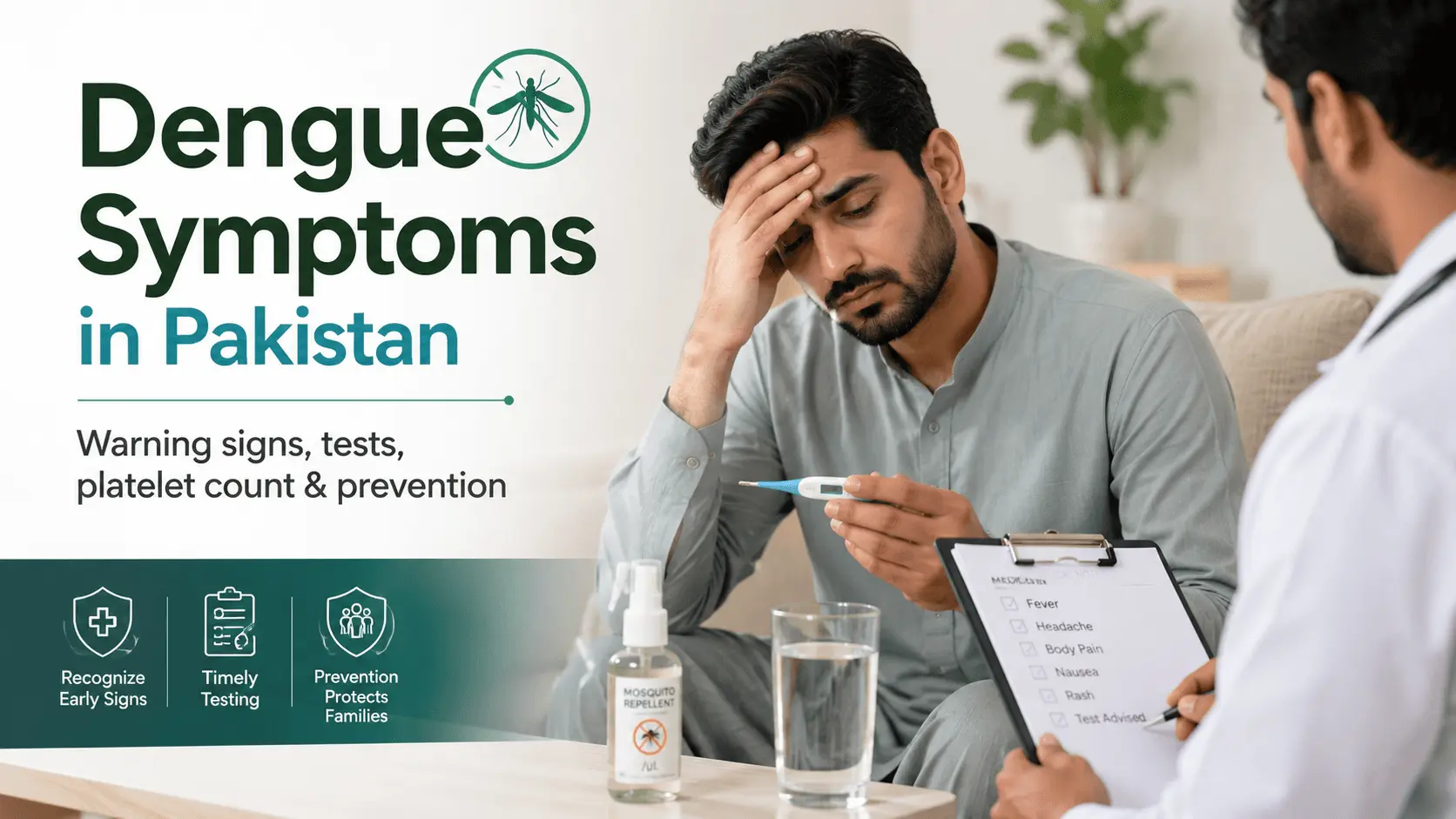
Dengue symptoms in Pakistan typically start with high fever, severe headache, and muscle pain. Recognizing early signs and knowing when to seek a dengue fever test are vital to avoid complications.
In Pakistan, dengue fever is a seasonal challenge that many adults face, especially during the monsoon and post-monsoon months. The symptoms often begin suddenly with high fever, intense headaches, and muscle aches. Recognizing these symptoms early and understanding the importance of tests like the dengue fever test and monitoring your platelet count can make a big difference in managing the illness safely.
Below, you will find detailed information about dengue symptoms, warning signs that require urgent medical attention, how dengue is diagnosed, and practical tips for dengue prevention in Pakistan.
What Are the Common Dengue Symptoms in Pakistan?
Dengue symptoms usually appear 4 to 10 days after a mosquito bite from an infected Aedes mosquito. In Pakistan, these symptoms are often noticed during and after the rainy season when mosquitoes breed more.
The most common early symptoms include:
- High fever (bukhar): Sudden onset of a high fever up to 40°C (104°F), lasting 2 to 7 days.
- Severe headache: Pain behind the eyes is common and can be quite intense.
- Muscle and joint pain: Often called "break-bone fever" because of the severe muscle and bone pain.
- Nausea and vomiting: Feeling sick or vomiting may accompany the fever.
- Skin rash: A rash can appear 3 to 4 days after the fever starts, sometimes spreading over the body.
- Fatigue and weakness: Feeling very tired even after the fever drops.
Many adults in Pakistan notice these symptoms but sometimes mistake them for common flu or other viral infections, delaying medical attention. If you live in dengue-prone cities like Karachi, Lahore, Islamabad, or Rawalpindi during mosquito season, be extra vigilant.
How Is Dengue Diagnosed in Pakistan?
Diagnosing dengue typically starts with a physical examination and discussion of symptoms and recent mosquito exposure. To confirm dengue, doctors in Pakistan recommend a dengue fever test, which detects the virus or antibodies in the blood.
The two common blood tests are:
- NS1 antigen test: Detects dengue virus early in the course of illness (first 1-5 days of fever).
- IgM/IgG antibody tests: Detect antibodies that the body produces in response to dengue infection after the first few days.
These tests are widely available in diagnostic labs across Pakistan, though costs and wait times can vary. Early testing helps doctors monitor the infection and manage symptoms effectively.
What Is the Importance of Platelet Count in Dengue?
One of the critical aspects of dengue fever management is monitoring the platelet count. Platelets are blood cells that help with clotting and stopping bleeding. In dengue, the virus can cause a drop in platelet count, sometimes dangerously low.
In Pakistan's dengue season, doctors often order regular blood tests to check your platelet count dengue. When platelet levels fall below a safe threshold, the risk of bleeding increases. Patients with very low platelets need close observation to prevent complications such as bleeding gums, nosebleeds, or internal bleeding.
Regular monitoring helps guide treatment decisions. If platelet counts drop too low, doctors may admit patients to hospitals for supportive care and intravenous fluids. At home, patients should avoid medicines like aspirin or ibuprofen that can worsen bleeding risk.
What Are the Warning Signs of Severe Dengue?
Severe dengue is a dangerous form of the disease that can cause organ damage, bleeding, and even death if not managed promptly. Knowing the dengue warning signs helps you seek urgent care.
The warning signs usually appear 3 to 7 days after symptoms begin, often when the fever starts to drop. Watch out for:
- Severe abdominal pain or persistent vomiting.
- Bleeding from gums, nose, or under the skin (bruises or blood spots).
- Difficulty breathing or rapid breathing.
- Sudden weakness, cold or clammy skin, or restlessness.
- Blood in vomit or stool.
If you experience any of these signs, see a doctor immediately or visit a hospital. Early intervention can save lives.
How Can Dengue Be Prevented in Pakistan?
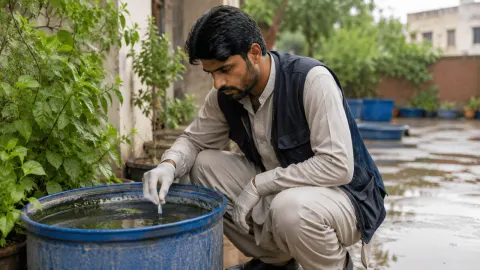
Dengue prevention is mostly about avoiding mosquito bites and reducing mosquito breeding sites. In Pakistan, dengue outbreaks increase after the rainy season when stagnant water collects in drains, pots, old tires, and construction sites.
Effective prevention steps include:
- Removing standing water from containers, flower pots, and uncovered tanks regularly.
- Using mosquito nets and window screens, especially at dawn and dusk when Aedes mosquitoes are most active.
- Wearing full-sleeve clothes and light-colored fabrics to reduce mosquito attraction.
- Applying mosquito repellents on exposed skin when outdoors.
- Community efforts to clean streets and drains to prevent mosquito breeding.
During Ramadan or hot summer days, staying hydrated and indoors with fans or air conditioning can also reduce mosquito exposure. Health authorities in cities like Lahore and Karachi often launch awareness drives and fumigation campaigns; participating in these efforts helps protect your family.
When Should I See a Doctor for Dengue Symptoms?
If you have a sudden high fever with muscle pain and headache during dengue season in Pakistan, it is wise to consult a doctor early. Testing helps confirm the infection and ensures proper monitoring.
Urgent doctor visits are needed if you notice any dengue warning signs like bleeding, severe abdominal pain, or difficulty breathing. Also, if your fever lasts more than a week or you feel worsening weakness, professional care is essential.
You can find and book an appointment with PMDC-verified doctors on HelloDr to get timely advice, testing, and treatment. Early medical attention reduces the risk of severe complications.
FAQs about Dengue Symptoms in Pakistan
How soon do dengue symptoms appear after a mosquito bite?
Can dengue be mistaken for other illnesses?
Is a low platelet count always dangerous in dengue?
Can dengue be prevented by vaccination in Pakistan?
Are home remedies effective for dengue?
If you suspect dengue or want to check your platelet count, you can order a dengue fever test or blood tests easily on HelloDr. Early detection and care are key.
This article is for general information only and is not a substitute for professional medical advice. Always consult a qualified doctor for diagnosis and treatment. On HelloDr you can book a PMDC-verified doctor for an in-clinic or online consultation.






0 Comments