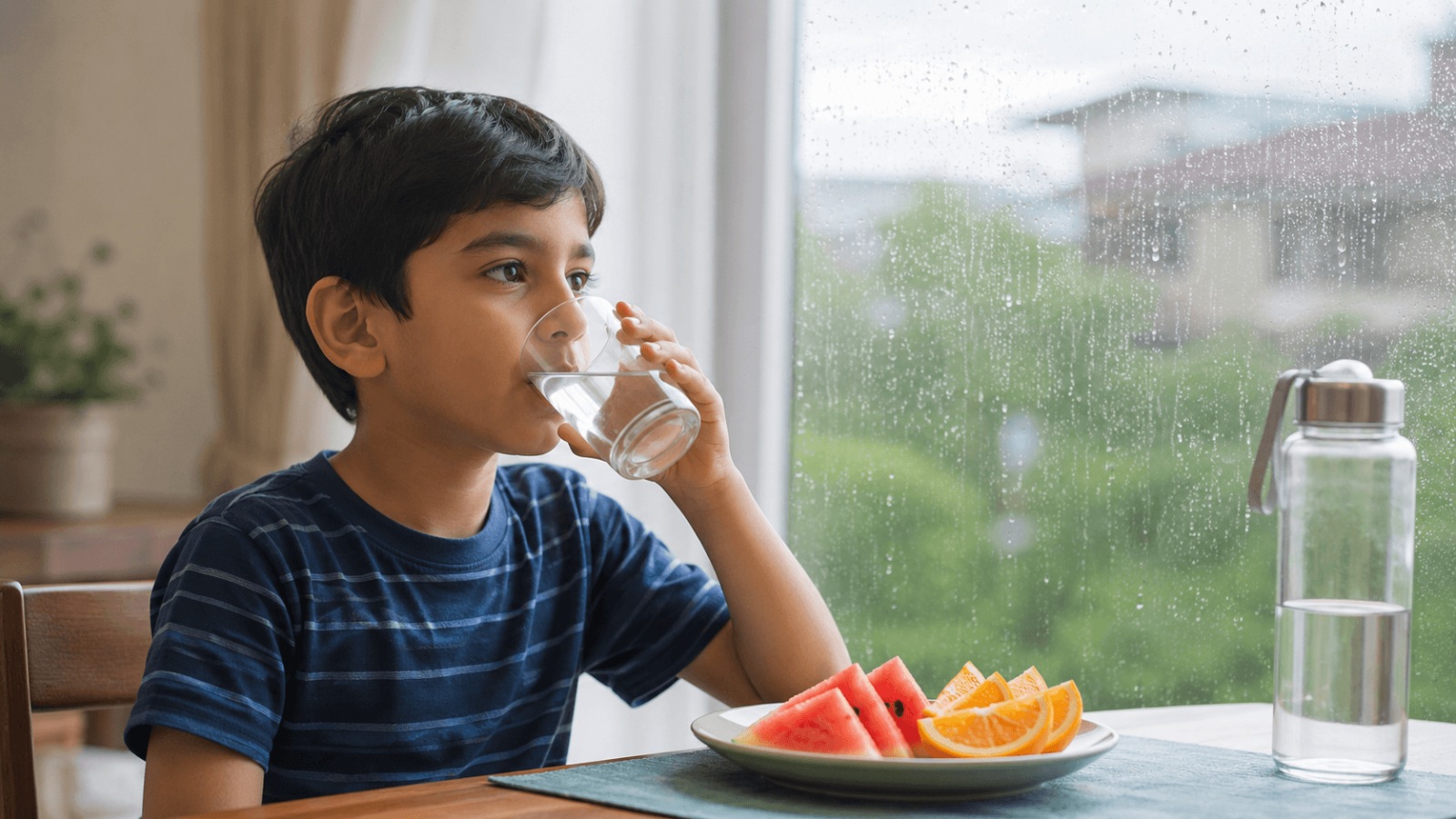
During Pakistan’s monsoon 2026, keeping children well-hydrated requires more than just offering water. Learn practical, safe child hydration tips tailored for monsoon health challenges.
Many parents assume that during the rainy monsoon season, children don’t need as much water because the weather is cooler and less dry. But this is a myth. In fact, children’s hydration needs can change during the monsoon, and not drinking enough fluid can lead to dehydration or worsen illness risks. In Pakistan’s humid monsoon climate, the best hydration practices for children are about balancing water, electrolytes, and diet to keep kids healthy and active.
Quick answer: The best hydration practices for children during Pakistan monsoon 2026 involve offering regular fluids throughout the day, including water, oral rehydration solutions (ORS) when needed, and hydrating foods like fruits and soups. Avoid sugary or caffeinated drinks, watch for dehydration signs, and adjust fluid intake if your child has fever or diarrhea. Consulting a pediatrician or using HelloDr’s online consultation can help tailor hydration to your child's needs.
Common Hydration Myths During Monsoon Season
Many Pakistani parents believe that the wet, cooler weather of the monsoon means children sweat less and so need less water. This can lead to underestimating hydration needs. However, monsoon air is very humid, which reduces sweat evaporation but does not reduce the body's fluid loss. Children may still lose fluids through breathing, urination, and minor sweating. For evidence-based information on best hydration practices for children during Pakistan monsoon 2026, see MedlinePlus (US NIH).
Another myth is that juices or sugary drinks can replace water. These drinks may taste appealing but can worsen dehydration by increasing thirst or causing diarrhea. Plain water and balanced fluids are safer.
Parents often think that because children are less active indoors during rainy days, they need less water. But illness risks such as viral infections increase in monsoon, which can cause fever and fluid loss. These factors increase hydration needs.
How Pakistan’s Monsoon Affects Child Hydration
Pakistan’s monsoon season, lasting roughly from July to September, brings heavy rains and high humidity. The humidity can reach above 80% in many cities, making the air heavy and sticky. This affects how children lose and feel thirst.
High humidity reduces sweat evaporation, so children may not feel as thirsty even when their bodies need fluids. This can cause hidden dehydration. Additionally, monsoon infections like gastroenteritis, dengue, and flu are more common and cause increased fluid loss through fever, vomiting, or diarrhea. These illnesses make hydration even more critical.
In cities like Multan and Faisalabad where temperatures remain moderately warm during the monsoon, children playing outdoors can lose fluids quickly. Even indoors, fans and air-conditioning can dry mucous membranes, adding to fluid loss. Understanding these factors helps parents plan hydration better.
Practical Child Hydration Tips for Monsoon Child Health in Pakistan
Parents can improve child hydration during monsoon by following practical, simple steps:
- Offer fluids regularly: Encourage small sips of water every 30-60 minutes, not just when thirsty. Use attractive cups or bottles to make drinking fun.
- Include hydrating foods: Soups, watery fruits like watermelon and oranges, and homemade fruit juices with no added sugar can help.
- Limit sugary and caffeinated drinks: Avoid sodas, packaged juices, or tea which can cause more fluid loss or upset stomach.
- Use Oral Rehydration Solution (ORS) when needed: If the child has diarrhea or vomiting, ORS helps replace lost salts and fluids effectively. ORS packets are available in most pharmacies.
- Monitor urine and skin signs: Pale, clear urine and moist skin usually indicate good hydration. Dark urine, dry mouth, lethargy, or sunken eyes signal dehydration and require medical attention.
These tips align with guidelines from the World Health Organization on dehydration and child care during illness. Pakistani parents should keep these practical steps in mind, especially if children are attending school or daycare.
Hydration During Common Monsoon Illnesses in Children
Monsoon brings risks of illnesses that increase fluid needs. Fever, diarrhoea, and viral infections cause dehydration faster in children than adults. Here is how to manage hydration safely:
- During fever: Children may refuse food and water. Offer fluids frequently in small amounts. Avoid cold drinks if the child dislikes them, room temperature water is better.
- During diarrhoea and vomiting: Use ORS powders dissolved in clean water as the first choice to prevent dehydration. Avoid sugary drinks or fruit juices as sole fluids.
- During respiratory infections: Encourage fluids to loosen mucus and prevent dryness.
If your child is unable to keep fluids down, has persistent vomiting, high fever above 39°C, or shows signs of dehydration like drowsiness or rapid heartbeat, see a doctor urgently. These symptoms require prompt medical evaluation.
Comparing Hydration Options for Children During Monsoon
Not all fluids hydrate equally. Here is a comparison table of common hydration options for children in Pakistan’s monsoon:
| Fluid Type | Benefits | Considerations |
|---|---|---|
| Plain Water | Best basic hydration, safe, widely available | Needs frequent intake, may be refused by some children |
| Oral Rehydration Solution (ORS) | Replaces salts and fluids during illness effectively | Should be used with diarrhoea/vomiting; not a regular drink |
| Fresh Fruit Juices (no added sugar) | Provides vitamins and fluids | Limit quantity; excess may cause loose stools |
| Soups and Broths | Hydrating and nutritious, especially during illness | Ensure low salt and no spicy ingredients |
| Sugary Drinks (Sodas, Packaged Juices) | May be appealing to children | Can worsen dehydration, cause stomach upset; avoid |
How to Find and Book Child Hydration Help on HelloDr.pk
If you have concerns about your child’s hydration or related illnesses this monsoon, HelloDr.pk offers convenient access to verified pediatricians and child health specialists.
- Visit the pediatrician section on HelloDr.pk to find doctors focused on child health.
- Use the search filters to select doctors by city, availability, or consultation type (in-clinic or online video).
- Choose a doctor and book an appointment slot that fits your schedule with easy online payment options.
- For immediate hydration concerns, use online video consultation to get advice from home.
- You can also order relevant lab tests such as electrolyte panels if recommended by your doctor.
This seamless access helps parents get timely, expert guidance tailored to their child’s hydration and health needs during the monsoon season.
Key takeaways
- Monsoon humidity can mask dehydration, so encourage regular fluid intake even if your child does not ask for water.
- Use plain water, ORS for illness-related dehydration, and hydrating foods to keep children healthy.
- Avoid sugary drinks that can worsen hydration status or cause stomach upset.
- Watch for dehydration signs like dark urine or lethargy and seek medical help promptly.
- HelloDr.pk connects you with verified pediatricians and lab tests for expert care during Pakistan’s monsoon 2026.
Frequently Asked Questions
How much water should a child drink during monsoon in Pakistan?
Can fruit juices replace water for child hydration?
What signs show my child is dehydrated during monsoon?
Is Oral Rehydration Solution (ORS) necessary for every child in monsoon?
Where can I get reliable advice on child hydration in Pakistan?
Keeping children well-hydrated during Pakistan’s monsoon 2026 means understanding that the rainy season brings unique challenges. The right fluids, watchful care for illness, and quick access to experts make all the difference. Use the practical tips here and HelloDr’s trusted platform to protect your child’s health this monsoon.
This article is for general information only and is not a substitute for professional medical advice. Always consult a qualified doctor for diagnosis and treatment. On HelloDr you can book a PMDC-verified doctor for an in-clinic or online consultation.




0 Comments