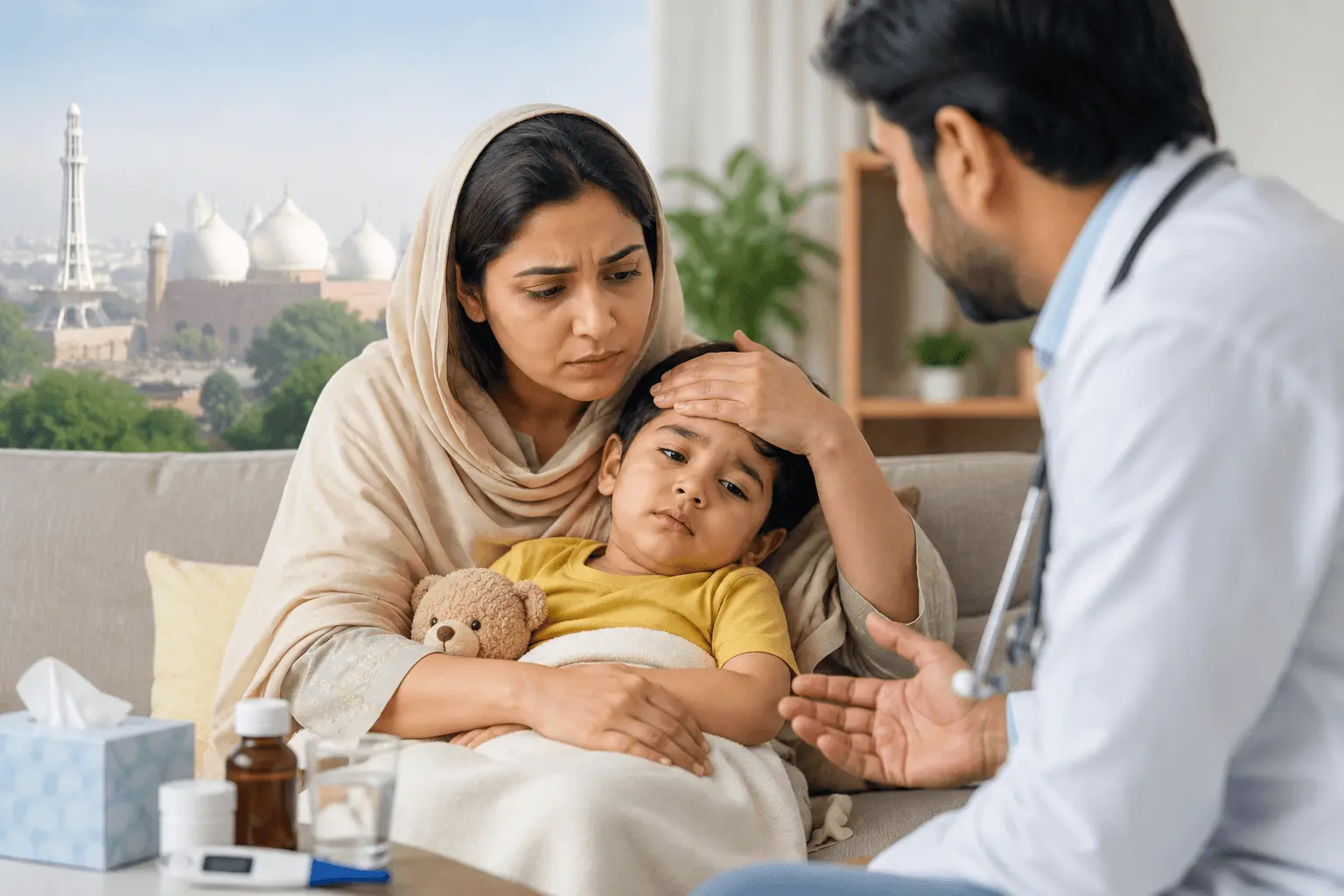
If your child has a fever, it’s important to know when to visit a doctor to avoid complications. Watch for danger signs like persistent high fever or unusual behaviour.
When your child has a fever, it can be worrying, especially if you’re unsure whether it needs urgent medical attention. In Pakistan, with common illnesses like dengue and seasonal infections, knowing when to see a doctor can protect your child from serious complications. Key signs include a very high or persistent fever, dehydration, or unusual behaviour such as difficulty breathing or seizures.
Quick answer: See a doctor urgently if your child’s fever lasts more than 3 days, is very high (above 39.4°C/103°F), or if they show danger signs like difficulty breathing, persistent vomiting, lethargy, or rash. For infants under 3 months, any fever requires immediate medical attention. For common fevers, you can give fever medicine as advised and monitor closely, but always consult a pediatrician for safety.
What causes fever in children in Pakistan?
Fever in children usually means the body is fighting an infection. In Pakistan’s climate and environment, common causes include viral infections like flu, colds, and especially dengue during the monsoon and post-monsoon season. Bacterial infections such as ear infections, throat infections, or pneumonia can also cause fever.
In rural or crowded urban areas, children may catch infections more easily due to close contact and environmental factors. Seasonal changes affect fever patterns; for instance, dengue fever spikes during the rainy months when mosquitoes breed. Street food or unhygienic water can sometimes lead to gastrointestinal infections causing fever.
Sometimes, fever is part of a childhood vaccination response or teething. However, persistent or very high fever is less common in these cases and should be checked by a doctor. Understanding the cause helps guide treatment and whether urgent care is needed.
What are baby fever signs to watch for?
Babies can’t tell you how they feel, so you need to watch for signs that show they have a fever or are unwell. A baby fever sign is usually feeling hot to touch, especially on the forehead or back of the neck. Other signs include irritability, poor feeding, excessive sleepiness, or unusual crying.
In Pakistan’s hot climate, babies may sweat and be restless with even a mild fever. Parents should also look for cold hands and feet or mottled skin, which can indicate circulation problems. A baby younger than 3 months with a fever needs immediate medical evaluation because their immune system is not fully developed.
To check fever accurately, use a digital thermometer under the armpit or rectally for infants. Oral thermometers are less reliable in young children. Remember, baby fever signs sometimes overlap with other illnesses, so monitor closely and consult a pediatrician if unsure.
What are fever danger signs in children?
Fever danger signs in children are symptoms that suggest the illness is serious and needs urgent medical care. These signs include very high fever (above 39.4°C or 103°F), fever lasting more than three days, seizures or convulsions, difficulty breathing, persistent vomiting or diarrhoea, and dehydration.
Other danger signs are extreme lethargy (child is very sleepy or difficult to wake), refusal to drink fluids, rash that doesn’t fade when pressed, and persistent abdominal pain. In Pakistan, dengue symptoms in kids such as bleeding gums, bruising, or sudden weakness are red flags.
Recognizing these signs quickly can prevent complications like hospitalization. If you see any of these danger signs, take your child to a hospital or a qualified pediatrician immediately. Early treatment can save lives.
How can parents manage child fever at home safely?
Most fevers in children can be managed at home with simple care. Keep your child comfortable by dressing them in light clothes and ensuring the room is well-ventilated but not cold. Offer plenty of fluids like water, fresh fruit juices, or oral rehydration solutions (ORS) to prevent dehydration, especially in Pakistan’s warm weather.
You can use child fever medicine like paracetamol or ibuprofen to reduce fever and discomfort. Always follow the dosing instructions on the medicine package or as advised by a doctor. Avoid giving aspirin to children due to risk of Reye’s syndrome. Do not alternate medicines unless specifically instructed by a healthcare professional.
Rest is important, but encourage gentle activity if the child feels up to it. Avoid traditional remedies that are not medically proven, such as cold baths or herbal pastes, as they may cause harm or delay proper treatment. Monitor the fever and other symptoms closely, and seek medical advice if the fever persists or worsens.
What are dengue symptoms in kids to watch for in Pakistan?
Dengue is a common mosquito-borne disease in Pakistan, especially during and after the monsoon season. Dengue symptoms in kids often start with a sudden high fever lasting 2–7 days. Other signs include severe headache, pain behind the eyes, muscle and joint pain, and rash.
Children may also experience nausea, vomiting, or tiredness. Warning signs of severe dengue include bleeding gums, nosebleeds, easy bruising, persistent vomiting, abdominal pain, and difficulty breathing. These symptoms need immediate hospital care.
Because dengue can progress quickly in children, early detection is key. If your child lives in or has recently visited dengue-prone areas like Karachi, Lahore, or Islamabad during mosquito season, watch carefully for these symptoms and seek prompt medical advice from a pediatrician or visit a hospital if warning signs appear.
When should parents see a doctor for child fever in Pakistan?
Parents should see a doctor if their child's fever lasts more than three days or if the temperature rises above 39.4°C (103°F) [VERIFY]. Immediate medical attention is necessary for infants under 3 months with any fever. Also, visit a doctor if the child shows fever danger signs like difficulty breathing, seizures, persistent vomiting, rash, dehydration, or severe weakness.
In Pakistan, it is common to face long waits at clinics. To save time, parents can book appointments with PMDC-verified pediatricians through HelloDr, which offers both in-clinic and online consultations. This can help get expert advice quickly, especially during dengue season or flu outbreaks.
If you notice dengue symptoms or the child has a chronic health condition like asthma or heart disease, consult a specialist without delay. Early diagnosis and treatment can prevent complications and reduce hospital stays.
What are common child fever medicine options in Pakistan?
In Pakistan, common child fever medicines include paracetamol (acetaminophen) and ibuprofen. Both are widely available at pharmacies and considered safe when used according to age and weight guidelines. Paracetamol is often the first choice for reducing fever and relieving pain.
Ibuprofen can be used if paracetamol alone does not reduce fever effectively, but it should be avoided in children with certain conditions like dehydration or stomach issues. Always read the package instructions carefully and do not exceed the recommended dose. Avoid giving adult medicines to children.
Since some street pharmacies may offer unregulated medicines, it is safest to get medicines from trusted pharmacies and consult a pediatrician before giving any new medicine. You can find verified pharmacies on HelloDr’s pharmacy page, which ensures medicine quality and guidance.
How can parents prevent fever in children?
Preventing fever means reducing the risk of infections. In Pakistan, good hygiene is vital. Teach children to wash their hands regularly with soap, especially before eating and after using the toilet. Avoid crowded places during flu season if possible.
Use mosquito nets, repellents, and eliminate stagnant water to prevent dengue. Ensure your child’s vaccinations are up to date, including vaccines against common childhood infections. During Ramadan or hot weather, keep children hydrated and avoid fried or street food that may upset the stomach.
Maintaining a healthy diet with roti, daal, vegetables, and fresh fruits strengthens the immune system. Regular check-ups with a pediatrician help catch early signs of illness. Preventive care is a key part of managing child health in Pakistan’s environment.
| Age Group | Fever Threshold | Urgent Signs Warranting Doctor Visit |
|---|---|---|
| Under 3 months | Any fever above 38°C (100.4°F) [VERIFY] | Any fever, poor feeding, lethargy, difficulty breathing |
| 3 months to 3 years | Fever above 39.4°C (103°F) lasting over 24 hours | Seizures, persistent vomiting, rash, dehydration |
| Over 3 years | Fever above 39.4°C (103°F) lasting more than 3 days | Severe headache, breathing difficulty, bleeding signs |
In Pakistan, knowing these thresholds helps parents decide on urgent medical care or home monitoring.
FAQs
When is a child's fever considered dangerous in Pakistan?
What are the first steps to take when a baby has a fever?
How can I tell if my child’s fever might be dengue?
Can I buy child fever medicine without a prescription in Pakistan?
Are there special precautions for fever during Ramadan?
Where can I find a trusted pediatrician in Pakistan?
If your child’s fever concerns you, remember that timely medical advice can prevent serious illness. Use HelloDr to connect with qualified healthcare professionals and get lab tests or medicines delivered safely.
This article is for general information only and is not a substitute for professional medical advice. Always consult a qualified doctor for diagnosis and treatment. On HelloDr you can book a PMDC-verified doctor for an in-clinic or online consultation.






0 Comments